Showing posts with label Aircraft technology. Show all posts

Unmanned Aerial Vehicle Aircraft Technology Made in Indonesia

Unmanned aircraft (Puna) has a very small size, with a wingspan of less than 4 meters. However, its role will be very large, especially keeping the defense of the territory of the Republic of Indonesia enemy alien ships trying to enter, and also against the terrorists.

Kestrel and Sriti is a product made in Indonesia, not imported. Puna Sriti type is perfect for the needs of tactical forces or types of short range, while Alap-alap for surveillance and reconnaissance operations.

Head of the Agency for the Assessment and Application of Technology (BPPT) Marzan A. Iskandar said it immediately produces drone. Not just a prototype. "Right now we are finalizing it for the benefit of reconnaissance aircraft and operations," he said after awarding BJ Habibie Technology Award 2012 in the Hall of BPPT, Jakarta, Wednesday, September 12, 2012.

There are at least two benefits of unmanned aircraft made in Indonesia. For defense purposes, one of which oversees foreign ships that are in Indonesia, also for civilian purposes. "In the past, these aircraft are used to support the creation of artificial rain," said Marzan.
In September it will be tested in conjunction with the Ministry of Defence. "Tests conducted at Halim Perdanakusuma sense. Having decided that the new production and how many needs," she said.

Unmanned aircraft developed by BPPT actually already appeared in five variants. Three is a type of UAV aircraft for mapping surveys while two variants for defense. This aircraft will be used by the Defense Department and the military.

Besides Alap-alap and Sriti, previously woodpecker, Wulung, and Crow. Wulung suitable for monitoring high altitude missions. Among other things, shooting air at a very wide area, measurement characteristics of the atmosphere, and monitoring of leakage power at high voltage power line.

Meanwhile, Crow suitable for aerial photography missions in wide range. And trigger suitable for aerial photography missions on a small area, close surveillance of a target, forest monitoring, monitoring of sea and beach.

Specification
Like what unmanned reconnaissance aircraft made in Indonesia? BPPT explained, drone made in Indonesia would be designed with the concept of autopilot and autonomous. This aircraft is moved automatically through the control of the Ground Control System (GCS).

"So keep it under control, the plane can not go anywhere, according to the control program at GCS," said Agus Suprianto, engineering staff Work Unit Industrial Technology Center Deputy Defence Industrial Technology and Engineering Design Build BPPT in Jakarta, Wednesday, September 12, 2012.


For Alap-Alap Double Boom and Sriti, both physically smaller than the drone for the benefit of other mapping survey. The ability to fly its maximum height is also lower than the survey aircraft observations.

"Reconnaissance aircraft capable of flying 7,000 feet, in order to more clearly focus on improving the performance of surveillance, illegal logging piracy, hijacking ships, so much to the defense technology," said Agus. And certainly not noisy and attract attention.

For photographing objects of surveillance, the aircraft is equipped with a specially-made video camera SONY. These cameras weighing up to 9 kg, according to Agus, has better quality than the usual camera and professional camera.

He continued, the aircraft will be able to conduct reconnaissance in the air after climbing process. "So the stage, after take off, the climbing, well after the new aircraft surveillance can record objects. During the motion of objects can be observed," he said.

As for sending data surveillance, the two aircraft is equipped with a sensor that is directly connected to the GCS on the mainland. Meanwhile, the data is real time, can be directly processed at the control center.

"This is a pioneering generation, the first generation of unmanned aircraft in Indonesia," he said. This particular aircraft will be used by the Ministry of Defense and Armed Forces. "It is adjustable, the smaller more agile," said Agus.

Matters drone had been a lively debate in early 2012. Related discourse MoD bought four drone of Kital Philippine Corporation (KPC). Reconnaissance aircraft combines machine from Italy, the infrastructure of the Philippines, and technology from Israel.

The discourse was opposition from Members of Parliament, one member of Commission I of the House of Gerindra, Ahmad Muzani asking drone purchase plan was canceled because Indonesia has been able to have a similar product. "Even bought neighboring countries like Malaysia," he said at the Parliament Building, Jakarta, Monday, March 26, 2012.

Alap-Alap Specifications Double Boom
Wing span: 3.510 m
Configuration: inverted v-tail boom and double high wibng
Empty weight: 8.5 Kg
Payload weight: 2.5 Kg
Maximum take off weight, MTOW: 18 Kg
Cruising speed: 55 Knots
Long fly: 5 Km
Flying range: 140 Km
Maximum flying height: 7,000 feet

Sriti Specifications
Wing span: 2.988 m
Configuration: flying wing
Empty weight: 6 Kg
Payload weight: 2 Kg
Maximum Take Off Weight, MTOW: 8.5 Kg
Cruising speed: 30 Knots
Long flight: 1 hour
Flying range: 5 Nautical mile
Maximum flying height: 3,000 feet

Vehicle Technology that can fly

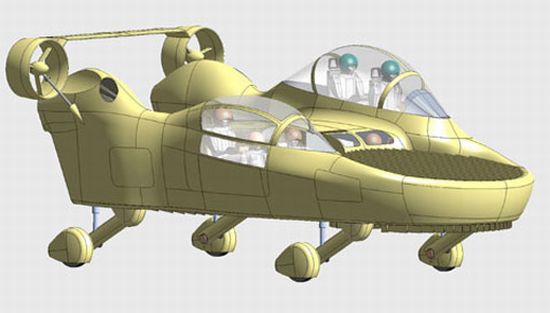
Vehicle must fly as usual we will mention the names of the types of aircraft, but Know you except aircraft and there are several types of vehicles capable of flying with either the work of creative people.

Here are some advanced technology vehicles that can fly like a plane :

1. Terrafugia Transition.
Terrafugia Transition
TRANSITION car's name, was made by Terrafugia, and I do not know who it is. Early-born car or plane is in Woburn, Massachusetts is a car or plane (we better call the car) is very easy to maneuver, was "mild" and the wings can be folded to save space. Terrafugia Transition is to make the integration or combination of driving and flying the plane, possibly by driving this car you automatically become a pilot.

2. Martin Jetpack.
Martin Jetpack
Jetpack probably is not new for us, but that has never been my favorite game to play first, which is GTA SAN ANDREAS different here Jetpack Jetpack located in GTA san andreas, Jetpack here using baling2 and not the jet power. Jetpack is sold by martin at Senior America, namely eBay for $ 30,000.

3. Parajet SkyCar
Parajet SkyCar
Car body shape that is super lightweight soprty and has very good acceleration, can reach 62 mph in 4.2 seconds while being flown is 32 mph minimum speed, can last up to 200 miles in the air ya my favorite.

4. Moller M400
Moller M400
Maybe this is my 2nd favorite flying vehicles, with red and 4 baling2 and cool design that is very interesting my eye this vehicle flying in the same way as aircraft, vehicle speed in the 375 MPH. Although this vehicle is not environmentally friendly, with 20mil per gallon of ethanol.

5. TAM Rocket Belt
TAM Rocket Belt
For those who like james bond movie, this vehicle may be familiar, but this vehicle is much different from those in the film, as in old movies and the original can only be driven during the 30 seconds it makes agan not go away or faded away.

6. PAL-V
PAL-V
Whether the helicopter? is it the motor? whether the automobile? bajaj is it? . while on the road, as cars are thin and only had 3 wheels are very efficient in crowded cities. when agan want to fly stay quit, then now is the rotor blades spinning on this vehicle, like transformers.

7. Water-Powered Jetpack
Water-Powered Jetpack
This Car most environmentally rich, because that gives thrust or impulse is water, but still use the fuel for the engine to give a boost to $ 430 Pon, can fly as fast as 22 mph and a maximum of 3 floors.

8. X-Hawk
X-Hawk
Maybe just a sketch, maybe just a picture, but from the sketch of an object appear although there is no clear information that is sure this vehicle can fly as fast as 155 mph and as high as 1200 feet.

9. International's Jetpacks
International's Jetpacks
With the use of jet fuel and can only fly for 33 seconds and version 2, which can fly for 43 seconds.

10. Milners' AirCar
Milners' AirCar
Perhaps the most similar vehicle to the aircraft, except the rear wing added that there is greater pressure, but also when seen as a cool car, while on the road can run at speeds of 85 mph and when flying in the air can reach as high as 25 000 feet and as fast as 200 mph .

Role of the Certificated Flight Instructor

Flight Instructor
To become a CFI, a Pilot must meet the provisions of 14 CFR part 61. The FAA places full responsibility for student flight training on the shoulders of the CFI, who is the cornerstone of aviation safety. It is the job of the flight instructor to train the student pilot in all the knowledge areas and teach the skills necessary for the student pilot to operate safely and competently as a certificated pilot in the NAS. The training will include airmanship skills, pilot judgment and decision-making, and good operating practices.

A pilot training program depends on the quality of the ground and flight instruction the student pilot receives. The flight instructor must possess a thorough understanding of the learning process, knowledge of the fundamentals of teaching, and the ability to communicate effectively with the student pilot. He or she uses a syllabus and teaching style that embodies the “building block” method of instruction. In this method, the student progresses from the known to the unknown via a course of instruction laid out in such a way that each new maneuver embodies the principles involved in the performance of maneuvers previously learned. Thus, with the introduction of each new subject, the student not only learns a new principle or technique, but also broadens his or her application of those principles or techniques previously learned.

Insistence on correct techniques and procedures from the beginning of training by the flight instructor ensures that the student pilot develops proper flying habit patterns. Any deficiencies in the maneuvers or techniques must immediately be emphasized and corrected. A flight instructor serves as a role model for the student pilot who observes the flying habits of his or her flight instructor during flight instruction, as well as when the instructor conducts other pilot operations. Thus, the flight instructor becomes a model of flying proficiency for the student who, consciously or unconsciously, attempts to imitate the instructor. For this reason, a flight instructor should observe recognized safety practices, as well as regulations during all flight operations.

The student pilot who enrolls in a pilot training program commits considerable time, effort, and expense to achieve a pilot certificate. Students often judge the effectiveness of the flight instructor and the success of the pilot training program based on their ability to pass the requisite FAA practical test. A competent flight instructor stresses to the student that practical tests are a sampling of pilot ability compressed into a short period of time. The goal of a flight instructor is to train the "total" pilot.

Role of the Designated Pilot Examiner
The DPE plays an important role in the FAA’s mission of promoting aviation safety by administering FAA practical tests for pilot and Flight Instructor Certificates and associated ratings. Although administering these tests is a responsibility of the ASI, the FAA’s highest priority is making air travel safer by inspecting aircraft that fly in the United States. To satisfy the need for pilot testing and certification services, the FAA delegates certain of these responsibilities to private individuals who are not FAA employees.

Appointed in accordance with 14 CFR section 183.23, a DPE is an individual who meets the qualification requirements of the Pilot Examiner’s Handbook, FAA Order 8710.3, and who:
• Is technically qualified.
• Holds all pertinent category, class, and type ratings for each aircraft related to their designation.
• Meets requirements of 14 CFR part 61, sections 61.56,61.57, and 61.58, as appropriate.
• Is current and qualified to act as PIC of each aircraft for which he or she is authorized.
• Maintains at least a Third-Class Medical Certificate,if required.
• Maintains a current Flight Instructor Certificate, if required.

Designated to perform specific pilot certification tasks on behalf of the FAA, a DPE may charge a reasonable fee. Generally, a DPE’s authority is limited to accepting applications and conducting practical tests leading to the issuance of specific pilot certificates and/or ratings. The majority of FAA practical tests at the private and commercial pilot levels are administered by DPEs.
DPE candidates must have good industry reputations for professionalism, integrity, a demonstrated willingness to serve the public, and adhere to FAA policies and procedures in certification matters. The FAA expects the DPE to administer practical tests with the same degree of professionalism, using the same methods, procedures, and standards as an FAA ASI.

The Role of the Federal Aviation Administration (FAA)

The Code of Federal Regulations (CFR)
The FAA is empowered by regulations to promote aviation safety and establish safety standards for civil aviation. The FAA achieves these objectives under the Code of Federal Regulations (CFR), which is the codification of the general and permanent rules published by the executive departments and agencies of the United States Government. The regulations are divided into 50 different codes, called Titles, that represent broad areas subject to Federal regulation. FAA regulations are listed under Title 14, Aeronautics and Space, which encompasses all aspects of civil aviation from how to earn a pilot’s certificate to maintenance of an aircraft. Title 14 CFR Chapter 1, Federal Aviation Administration, is broken down into subchapters A through N as illustrated in Figure 1-12.

For the pilot, certain parts of 14 CFR are more relevant than others. During flight training, it is helpful for the pilot to become familiar with the parts and subparts that relate to flight training and pilot certification. For instance, 14 CFR part 61 pertains to the certification of pilots, flight instructors, and ground instructors. It also defines the eligibility, aeronautical knowledge, flight proficiency, as well as training and testing requirements for each type of pilot certificate issued. 14 CFR part 91 provides guidance in the areas of general flight rules, visual flight rules (VFR), and instrument flight rules (IFR), while 14 CFR part 43 covers aircraft maintenance, preventive maintenance, rebuilding, and alterations.

Primary Locations of the FAA
The FAA headquarters are in Washington, D.C., and there are nine regional offices strategically located across the United States. The agency’s two largest field facilities are the Mike Monroney Aeronautical Center (MMAC) in Oklahoma City, Oklahoma, and the William J. Hughes Technical Center (WJHTC) in Atlantic City, New Jersey. Home to FAA training and logistics services, the MMAC provides a number of aviation safety-related and business support services. The WJHTC is the premier aviation research and development and test and evaluation facility in the country. The center’s programs include testing and evaluation in ATC, communication, navigation, airports, aircraft safety, and security. Furthermore, the WJHTC is active in long-range development of innovative aviation systems and concepts, development of new ATC equipment and software, and modification of existing systems and procedures.

Field Offices
Flight Standards Service
Within the FAA, the Flight Standards Service promotes safe air transportation by setting the standards for certification and oversight of airmen, air operators, air agencies, and designees. It also promotes safety of flight of civil aircraft and air commerce by:
• Accomplishing certification, inspection, surveillance, investigation, and enforcement.
• Setting regulations and standards.
• Managing the system for registration of civil aircraft and all airmen records.

The focus of interaction between Flight Standards Service and the aviation community/general public is the Flight Standards District Office (FSDO).

Flight Standards District Office (FSDO)
The FAA has approximately 130 FSDOs. [Figure 1-13] These offices provide information and services for the aviation community. FSDO phone numbers are listed in the telephone directory under Government Offices, DOT, FAA. Another convenient method of finding a local office is to use the FSDO locator available In addition to accident investigation and the enforcement of aviation regulations, the FSDO is also responsible for the certification and surveillance of air carriers, air operators, flight schools/training centers, and airmen including pilots and flight instructors. Each FSDO is staffed by Aviation Safety Inspectors (ASIs) who play a key role in making the nation’s aviation system safe.

Aviation Safety Inspector (ASI)
The Aviation Safety Inspectors (ASIs) administer and enforce safety regulations and standards for the production, operation, maintenance, and/or modification of aircraft used in civil aviation. They also specialize in conducting inspections of various aspects of the aviation system, such as aircraft and parts manufacturing, aircraft operation, aircraft airworthiness, and cabin safety. ASIs must complete a training program at the FAA Academy in Oklahoma City, Oklahoma, which includes airman evaluation, and pilot testing techniques and procedures. ASIs also receive extensive on-the-job training and recurrent training on a regular basis. The FAA has approximately 3,700 inspectors located in its FSDO offices. All questions concerning pilot certification (and/or requests for other aviation information or services) should be directed to the local FSDO.

FAA Safety Team (FAASTeam)
The FAA is dedicated to improving the safety of United States civilian aviation by conveying safety principles and practices through training, outreach, and education. The FAA Safety Team (FAASTeam) exemplifies this commitment. The FAASTeam has replaced the Aviation Safety Program (ASP), whose education of airmen on all types of safety subjects successfully reduced accidents. Its success led to its demise because the easy-to-fix accident causes have been addressed. To take aviation safety one step further, Flight Standards Service created the FAASTeam, which is devoted to reducing aircraft accidents by using a coordinated effort to focus resources on elusive accident causes.

Each of the FAA’s nine regions has a Regional FAASTeam Office dedicated to this new safety program and managed by the Regional FAASTeam Manager (RFM). The FAASTeam is “teaming” up with individuals and the aviation industry to create a unified effort against accidents and "tip" the safety culture in the right direction. To learn more about this effort to improve aviation safety, to take a course at their online learning center, or to join the FAASTeam, visit their web site at www.faasafety.gov/default.aspx.

Obtaining Assistance from the FAA
Information can be obtained from the FAA by phone, Internet/e-mail, or mail. To talk to the FAA toll-free 24 hours a day, call 1- 66-TELL-FAA (1-866-835-5322). To visit the FAA’s This manual is offered for sale on a subscription basis or is available online at: http://bookstore.gpo.gov.

Order forms are provided at the beginning of the manual or online and should be sent to the Superintendent of Documents, United States Government Printing Office (GPO). The AIM is complemented by other operational publications, which are available via separate subscriptions or online.

Handbooks
Handbooks are developed to provide specific information about a particular topic that enhances training or understanding. The FAA publishes a variety of handbooks that generally fall into three categories: Aircraft, Aviation, and Examiners and Inspectors. [Figure 1-15] These handbooks can be purchased from the Superintendent of Documents or downloaded (www. faa.gov/regulations_policies). Aviation handbooks are also published by various commercial aviation companies. Aircraft flight manuals commonly called Pilot Operating Handbooks (POH) are documents developed by the airplane manufacturer, approved by the FAA, and are specific to a particular make and model aircraft by serial number. This subject is covered in greater detail in Chapter 8, Flight Manuals and Other Documents, of this handbook. [Figure 1-16]

Advisory Circulars (ACs)
Advisory circulars (ACs) provide a single, uniform, agency- wide system that the FAA uses to deliver advisory material to FAA customers, industry, the aviation community, and the public. An AC may be needed to:
• Provide an acceptable, clearly understood method for complying with a regulation.
• Standardize implementation of the regulation or harmonize implementation for the international aviation community.
• Resolve a general misunderstanding of a regulation.
• Respond to a request from some government entity, such as General Accounting Office, NTSB, or the Office of the Inspector General.
• Help the industry and FAA effectively implement a regulation.
• Explain requirements and limits of an FAA grant program.
• Expand on standards needed to promote aviation safety, including the safe operation of airports.

There are three parts to an AC number, as in 25-42C. The first part of the number identifies the subject matter area of the AC and corresponds to the appropriate 14 CFR part. For example, an AC on certification: Pilots and Flight and Ground Instructors is numbered as AC 61-65E. Since ACs are numbered sequentially within each subject area, the second part of the number beginning with the dash identifies this sequence. The third part of the number is a letter assigned by the originating office and shows the revision sequence if an AC is revised. The first version of an AC does not have a revision letter. In Figure 1-17, this is the fifth revision, as designated by the "E".

Flight Publications
The FAA, in concert with other government agencies, orchestrates the publication and changes to publications that are key to safe flight. Figure 1-18 illustrates some publications a pilot uses.

The Professional Air Traffic Controllers Organization (PATCO) Strike

While preparing the NAS Plan, the FAA faced a strike by key members of its workforce. An earlier period of discord between management and the Professional Air Traffic Controllers Organization (PATCO) culminated in a 1970 "sickout" by 3,000 controllers. Although controllers subsequently gained additional wage and retirement benefits, another period of tension led to an illegal strike in August 1981. The government dismissed over 11,000 strike participants and decertified PATCO. By the spring of 1984, the FAA ended the last of the special restrictions imposed to keep the airspace system operating safely during the strike.

The Airline Deregulation Act of 1978
Until 1978, the CAB regulated many areas of commercial aviation such as fares, routes, and schedules. The Airline Deregulation Act of 1978, however, removed many of these controls, thus changing the face of civil aviation in the United States. After deregulation, unfettered free competition ushered in a new era in passenger air travel.

The CAB had three main functions: to award routes to airlines, to limit the entry of air carriers into new markets, and to regulate fares for passengers. Much of the established practices of commercial passenger travel within the United States went back to the policies of Walter Folger Brown, the United States Postmaster General during the administration of President Herbert Hoover. Brown had changed the mail payments system to encourage the manufacture of passenger aircraft instead of mail-carrying aircraft. His influence was crucial in awarding contracts and helped create four major domestic airlines: United, American, Eastern, and Transcontinental and Western Air (TWA). Similarly, Brown had also helped give Pan American a monopoly on international routes.

The push to deregulate, or at least to reform the existing laws governing passenger carriers, was accelerated by President Jimmy Carter, who appointed economist and former professor Alfred Kahn, a vocal supporter of deregulation, to head the CAB. A second force to deregulate emerged from abroad. In 1977, Freddie Laker, a British entrepreneur who owned Laker Airways, created the Skytrain service, which offered extraordinarily cheap fares for transatlantic flights. Laker’s offerings coincided with a boom in low-cost domestic flights as the CAB eased some limitations on charter flights, i.e., flights offered by companies that do not actually own planes but leased them from the major airlines. The big air carriers responded by proposing their own lower fares. For example, American Airlines, the country’s second largest airline, obtained CAB approval for "SuperSaver" tickets.

All of these events proved to be favorable for large-scale deregulation. In November 1977, Congress formally deregulated air cargo. In late 1978, Congress passed the Airline Deregulation Act of 1978, legislation that had been principally authored by Senators Edward Kennedy and Howard Cannon. [Figure 1-11] There was stiff opposition to the bill—from the major airlines who feared free competition, from labor unions who feared nonunion employees, and from safety advocates who feared that safety would be sacrificed. Public support was, however, strong enough to pass the act. The act appeased the major airlines by offering generous subsidies and it pleased workers by offering high unemployment benefits if they lost their jobs as a result. The most important effect of the act, whose laws were slowly phased in, was on the passenger market. For the first time in 40 years, airlines could enter the market or (from 1981) expand their routes as they saw fit. Airlines (from 1982) also had full freedom to set their fares. In 1984, the CAB was finally abolished since its primary duty of regulating the airline industry was no longer necessary.